
Underwater Domain Awareness (UDA) Framework for Sediment Management
Rishika Khanna
B.Tech (Mechanical) from Indian Institute of Technology, Delhi (IIT Delhi)
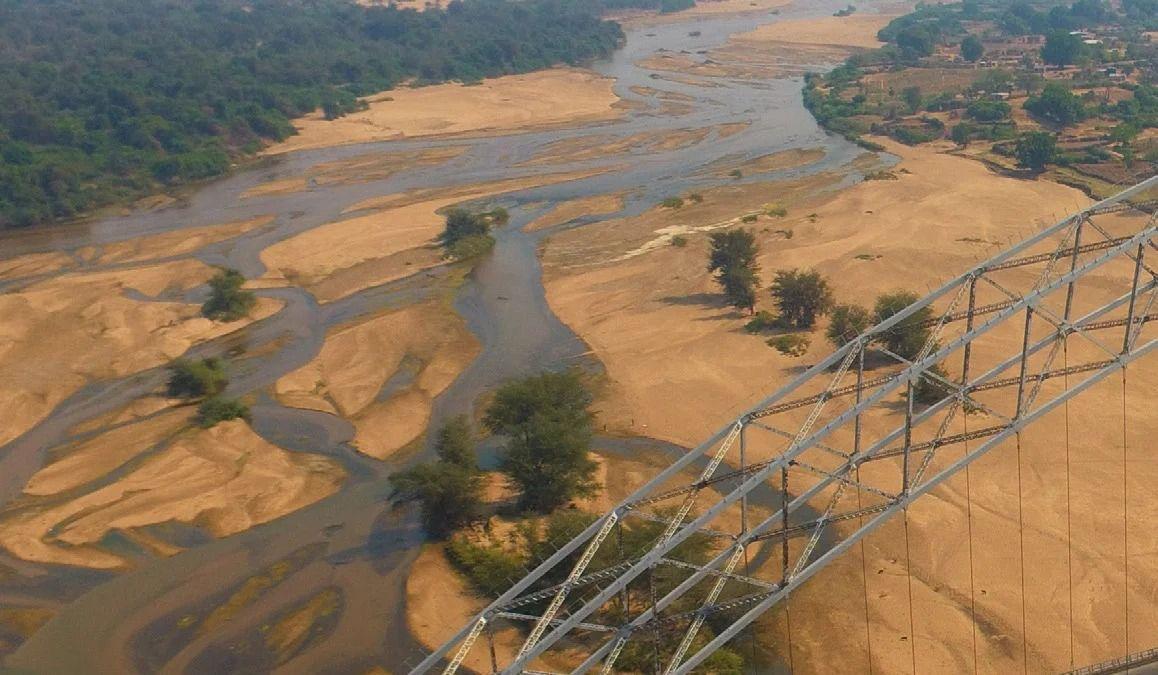
Underwater Domain Awareness (UDA) Framework for Sediment Management
Sediment management refers to the holistic management of sediment supply from rivers to coast taking into account the full range of human activities as well as sediment trapping by dams. Siltation and soil erosion is a natural process required to maintain a balance between source and sink. However, interference from anthropogenic activities causes disbalance in the process leading to significant increase in siltation rate. Water reservoirs, inland navigation systems, harbour basins, fisheries and ground water sources are the most effected from accumulating sediments. Suspended sediment affects light penetration and degree to which it is blocked is known as turbidity. With increasing turbidity, visibility or clarity decreases due to scattering of sunlight by the suspended particles making it difficult for visual feeding animals and suppressing the growth of algae and macrophytes. Rapid siltation also increases soil salinity and sediment deposits are known to cover the spawning sites of fish which interferes with their life cycle. In inland waterways, sediment deposits, in form of deltas, causes channel logging. Many rivers change their course due to sedimentation making them difficult to navigate. In water reservoirs storage loss is a major issue. In India, 0.95% of gross reservoir storage is lost annually to sediment deposition. Additionally, blockage of tunnels and spillways as well as damage of turbines and equipment from erosion are other problems faced by reservoirs due to siltation. Harbour basins also regularly deal with coastal erosion. A common practice for siltation management in coastal regions is marine dredging. However, lack of dumping sites and expensive equipment pose limitations and need to be tackled professionally. With 5,202 large dams and many more small dams and barrages, 111 Inland National Waterways worth 20,275 kms spread across 24 states and a total coastline length of 7516.6 km, India’s involvement in hydro projects is huge and the above mentioned problems scale up significantly causing enormous costs to the national economy. Therefore, it is critical to develop a framework for sediment management arises which could be employed before every water based project.
Full Article Content
Sign in to read the complete article.
Rishika Khanna
B.Tech (Mechanical) from Indian Institute of Technology, Delhi (IIT Delhi)
Rishika is currently pursuing a B.Tech (Mechanical) from Indian Institute of Technology, Delhi (IIT Delhi) and interning at Maritime Research Center, Pune for the summer of 2021. She is currently working towards formulating a proposal for Sediment Management for India under the UDA Framework.