
Catalysing Action for Our Ocean & Climate through Underwater Domain Awareness

J. Cathrine
Publication and Research Head at the Maritime Research Centre in Pune

Key Highlights
- India has an extensive coastline and rich marine biodiversity, making World Oceans Day significant for conservation efforts to maintain ecological balance and biodiversity.
- Oceans play a crucial role in India’s economy through fisheries, shipping, tourism, and offshore industries, necessitating sustainable resource management to support livelihoods and economic growth.
- Underwater Domain Awareness (UDA) is essential for effective ocean management. It involves marine research, surveillance, and data analysis to protect marine ecosystems and promote sustainable practices.
- Comprehensive strategies are needed to tackle ocean and climate challenges, including reducing greenhouse gas emissions, protecting marine ecosystems, adapting to climate impacts, and promoting sustainable practices in ocean-based industries.
World Oceans Day, celebrated annually on June 8th, highlights the critical role of oceans in sustaining life on Earth. This day holds profound significance for India with an extensive coastline, rich marine biodiversity, and a significant dependence on ocean resources. The theme for World Oceans Day 2024, “Awaken New Depths,” alludes to the growing need to understand our underwater systems and look deep into the nuances of ocean functions.
India’s geographical, ecological, economic, and cultural connections to the ocean are diverse. With a coastline touching the Arabian Sea, the Indian Ocean, and the Bay of Bengal, India is inherently a maritime nation. The country’s marine ecosystems are home to diverse species, making their conservation crucial for maintaining ecological balance and biodiversity. Furthermore, the oceans are integral to India’s economy, supporting industries such as fisheries, shipping, tourism, and offshore oil and gas exploration.
Full Article Content
Sign in to read the complete article.
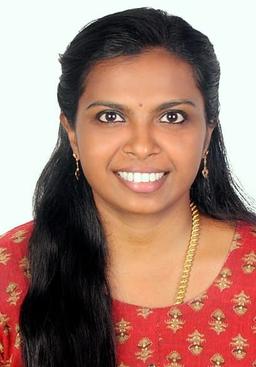
J. Cathrine
Publication and Research Head at the Maritime Research Centre in Pune
J Cathrine heads the Publication and Research team at the Maritime Research Centre in Pune. Previously, her work revolved around water management in the Indus Basin. Her research focuses on transboundary water issues, conflict resolution, sustainable water management, and community resilience. She graduated from St. Stephens College in Delhi with a bachelor’s degree in physics. She has also completed Ashoka University’s Young India Fellowship in Liberal Arts. She has completed her Masters in Water Science and Policy from Shiv Nadar University.