
Battleground Waters: Unravelling the Environmental Quandary Amid the Red Sea Crisis
Ms Divya Rai
Research Fellow at MRC
Key Highlights
- Red Sea crisis has now transcended its immediate impact on global trade, intertwining with a broader environmental quandary
- The ongoing clashes, initiated by Houthis, have targeted several vessels, including commercial ships and U.S. Navy warships.
- The lack of maritime safety capabilities in the region amplifies the challenges associated with cleanup efforts.
- The Red Sea crisis and the war in Ukraine both underscore the devastating impact of armed conflict on the marine environment.
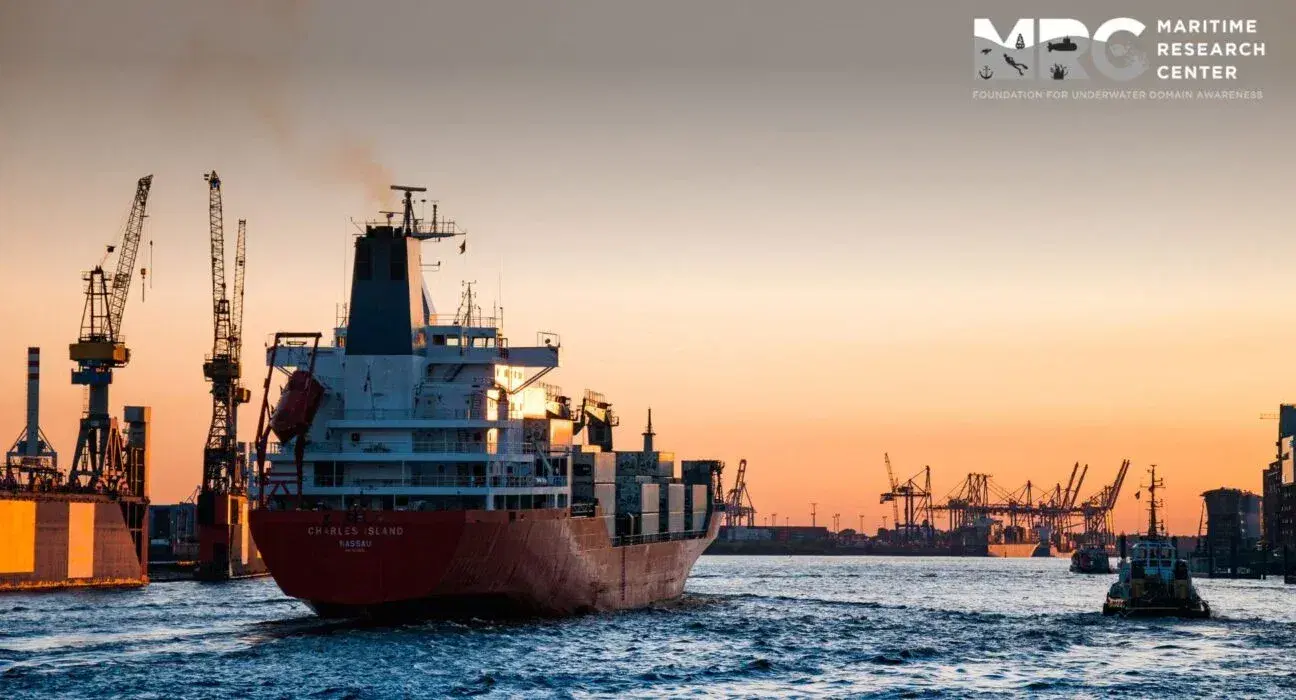
The Red Sea crisis has evolved into a pressing global concern, driven not only by disruption of international trade but also by its far-reaching environmental impacts, as the once tranquil waters have transformed into a battleground. The ongoing clashes, initiated by the Houthis—an Iran-backed Shi’ite rebel group in Yemen—have targeted several vessels, including commercial ships and U.S. Navy warships. The group claims attacks against ships in the Red Sea are in response to Israel’s conflict against Gaza-based militant group Hamas—which is also aligned with Iran—and says it will attack any Israel-linked vessels. This has led to an increasing armed exchange in the Red Sea, raising the stakes for global security.
“The Red Sea crisis has now transcended its immediate impact on global trade, intertwining with a broader environmental quandary that demands attention and action on a global scale.”
Shipping routes, often referred to as the arteries of international commerce, are indispensable for the functioning of the global economy. Historical trade routes, such as the Panama and Suez Canals, have played pivotal roles in shaping shipping trades to Europe and the United States. The Red Sea, particularly via the Suez Canal, stands out as one of the most traversed commerce routes globally. This route not only holds strategic importance but is also the quickest and shortest sea route between Asia and Europe.
Full Article Content
Sign in to read the complete article.
Ms Divya Rai
Research Fellow at MRC
Divya Rai is undertaking research on the Underwater Domain Awareness framework in various multilateral structures in South Asia under the Underwater Domain Awareness (UDA) Project Fellowship offered by the Maritime Research Centre (MRC). Her expertise lies in analyzing the need for the UDA framework in the BIMSTEC and India’s role in it, she has also worked on various issues related to South Asia such as regional and intra-regional connectivity, economic architecture, maritime security, environmental issues, and transport connectivity. he has published articles in reputed digital and print news platforms and magazines on issues about South Asia and the growing maritime influence of China in the Indo-Pacific, and geopolitics and non-traditional security threats in the South Asia region. She holds a Master of Science in Defense and Strategic Studies and a Bachelor of Science in Physics, Mathematics, and Defense and Strategic Studies from Allahabad University, Prayagraj.