
Beyond Conflict: Charting a Sustainable Future for Northeast India Through Integrated Model – UDA and TEK

Waikhom Rajlakshmi
Former MRC Intern and Student at Symbiosis School of Liberal Arts
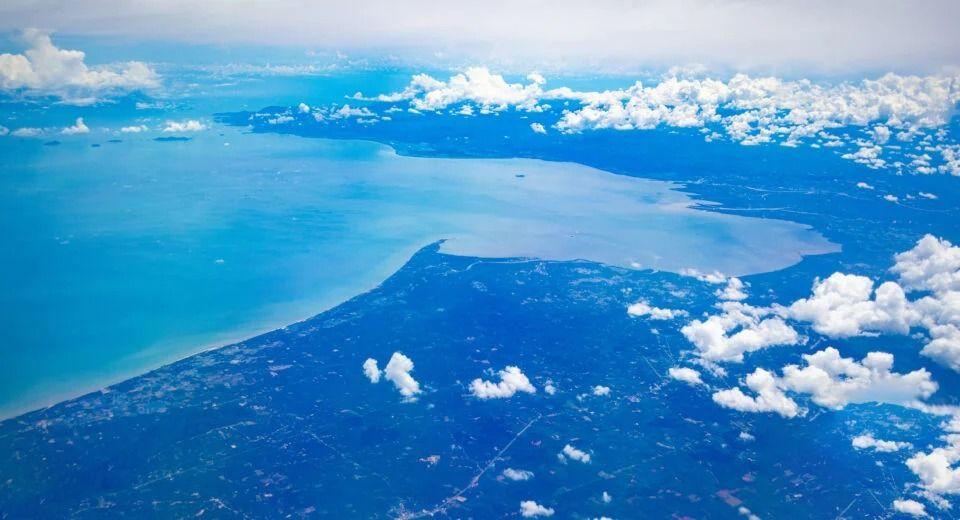
Key Highlights
- Encompassing Arunachal Pradesh, Assam, Manipur, Meghalaya, Mizoram, Nagaland, Tripura, and Sikkim, the North East Region (NER) is a world of breathtaking landscapes, vibrant cultures, and resilient communities.
- Water is one of the main resources that support the livelihoods of various communities and also cradles the area’s rich biodiversity.
- Good policy can be formulated by combining a solid database with local knowledge and understanding.
- This paper proposes an integrated model in which the UDA framework and tools are synchronised with the region’s particular groups’ deep understanding of Traditional Ecological Knowledge (TEK).
~By Waikhom Rajlakshmi (Former MRC Intern and Student at Symbiosis School of Liberal Arts)
India is a multi-ethnic state and is known popularly for its diversity. In this context, Northeast India can be considered the most diverse part of India, both in terms of ethnicity and physiography. Northeast India (NER) has often been described as “another India, the most diverse part of a diverse India” (Verghese, 2004). Anyone who visits the region quickly realises why. Encompassing Arunachal Pradesh, Assam, Manipur, Meghalaya, Mizoram, Nagaland, Tripura, and Sikkim, it is a world of breathtaking landscapes, vibrant cultures, and resilient communities. Yet, behind its natural beauty lies a reality of fragility and vulnerability.
Geographically, the region is connected to India only by the narrow stretch called the Siliguri Corridor, which is barely 22 kilometres wide. Surrounded by five countries, i.e., China, Myanmar, Bangladesh, Bhutan, and Nepal, it is as much a frontier as a bridge. With more than 5000 kilometres of international borders, its location makes it highly sensitive to global politics and local instability (Tasung, 2024). Occupying a pivotal place in India’s strategic security framework due to its geostrategic location, Northeast India has been characterised by a discourse of “durable disorder” (Baruah, 2005). This term aptly captures the region’s persistent state of conflict, rooted in a complex web of historical grievances, multi-layered identity formations, and ethnic politics (Ngaihte, 2013; Jamir & Yaden, 2024). This leads to neglecting other factors that might be affecting this dynamic. It is an area abundant with resources; its potential is untapped and often undermined. Water is one of the main resources that support the livelihoods of various communities and also cradles the area’s rich biodiversity. The region’s transboundary water resources have emerged as a fundamental driver and amplifier of these political issues, and the escalating effects of climate change have turned this lifeline into fault lines.
Full Article Content
Sign in to read the complete article.

Waikhom Rajlakshmi
Former MRC Intern and Student at Symbiosis School of Liberal Arts
Waikhom Rajlakshmi is a Liberal Arts student at the Symbiosis School of Liberal Arts (SSLA), Pune. During her 2025 internship at the Maritime Research Center, she conducted research on Traditional Ecological Knowledge (TEK) in Northeast India. Her work explores integrating TEK into the Underwater Domain Awareness (UDA) Framework to enhance management of the region’s freshwater systems.